
Dry Needling
Have you been told dry needling might help, but you're not entirely sure what it involves? Or maybe you've been dealing with persistent muscle pain or tightness that isn't shifting, and you're ready to try something different?
Dry needling, sometimes called medical acupuncture, is a modern, evidence-based treatment used by our osteopaths to relieve muscle pain and improve movement. It works by inserting very fine, sterile needles into specific points of tension in the muscle, known as trigger points, to release tightness, ease pain, and encourage your body's own healing processes. It's rooted in Western anatomy and physiology, which sets it apart from traditional acupuncture, and is typically used as part of a broader osteopathic treatment plan rather than in isolation.



What can Dry Needling help with?
Dry needling works directly on the muscles and the points of tension within them, which makes it particularly well-suited to musculoskeletal pain and movement problems. Here are some of the things it may help with:
- Back and neck pain: releasing trigger points in tight muscles can ease chronic tension and help restore freer, more comfortable movement
- Sports injuries: may support recovery from muscle strains and overuse injuries, and help get you back to activity sooner
- Tension headaches: often rooted in tightness through the neck and shoulder muscles, which dry needling can target directly
- Postural strain: if prolonged sitting or repetitive movement has left muscles locked into unhelpful patterns, this treatment can help shift them
- Shoulder pain: particularly where tightness in the surrounding muscles is limiting your range of movement
- Hip and gluteal pain: can help with conditions like piriformis syndrome or general tightness through the hips and buttocks
- Plantar fasciitis and lower leg pain: addressing muscle tension higher up the chain may relieve pressure on the foot and heel
- Fibromyalgia and widespread muscle sensitivity: may help ease localised trigger points and reduce areas of heightened pain
Meet our Therapists
All of our dry needling practitioners are fully qualified, GOsC-registered osteopaths. Registration with the General Osteopathic Council is a legal requirement to practise osteopathy in the UK, meaning you can be confident they've met rigorous standards of training, safety, and professional conduct. In addition to their osteopathic degree-level training, they have each completed further qualifications in dry needling and use it as part of an integrated, personalised approach to care.
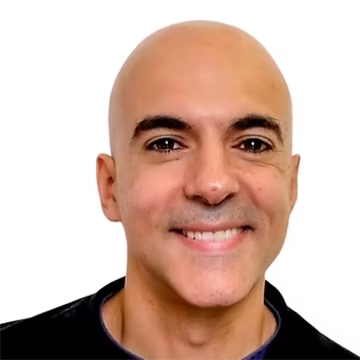
Reno Pelekanou
Associate Osteopath
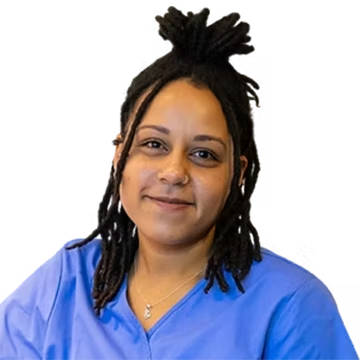
Naomi Nekesa
Associate Osteopath
Ready to book your appointment?
We offer a range of treatments to help you feel your best. Book online,
call us or visit our centre to schedule your appointment.
What to expect at my first appointment?
- Wear comfortable, loose clothing that allows easy access to the area being treated, whether that's the back, neck, legs, or shoulders
- Your appointment starts with a conversation about your symptoms, health history, and what you're hoping to get from treatment
- The needling itself uses very fine needles placed at specific points in the affected muscles; most people find it far less uncomfortable than they expected
- You may feel a brief twitch or a deep aching sensation when a trigger point is reached, which is a normal sign that the muscle is responding
- Afterwards, the treated area may feel a little sore or tired, similar to the feeling after a hard workout; this usually settles within a day or two
Acupuncture
Acupuncture 1st Consultation
£99
Acupuncture Follow Up
£90
Your Questions Answered
How is dry needling different from acupuncture?
The two treatments both use fine needles, but the similarity largely ends there. Dry needling is based on Western anatomy and physiology, and targets specific trigger points in the muscles to relieve pain and tension. Traditional acupuncture is rooted in Chinese medicine and works with the body's energy pathways. At BTC, our osteopaths offer dry needling as part of their osteopathic care, while our separate team of acupuncturists practise traditional Chinese medicine acupuncture. Both are available here if you'd like to explore either option.
Does it hurt?
Most people are pleasantly surprised by how manageable it is. The needles are very fine, and the initial insertion is usually barely noticeable. You may feel a brief twitch or a deep aching sensation when a trigger point is reached, which is actually a sign the treatment is working. It's rarely what people would describe as painful, though everyone's experience is a little different.
How many sessions will I need?
It depends on how long you've had the problem and how your body responds. Some people notice a real improvement after one or two sessions. Others with longer-standing issues benefit from a short course of treatment. Your osteopath will give you a clear picture after your first appointment and won't recommend more sessions than they genuinely feel are useful.
Will it be painful?
Dry needling is safe when carried out by a qualified practitioner, as it is here. Some people experience mild soreness or a small bruise at the needle sites afterwards, which typically settles within 24 to 48 hours. Occasionally people feel briefly lightheaded immediately after treatment; staying well hydrated and taking it gently for a short while usually helps. If you have any concerns about whether dry needling is right for you, just get in touch and we'll be happy to talk it through.

Should I wait until it gets worse?
We hear this all the time: "It's not that bad yet, I'll see how it goes." The truth? Muscle and joint pain doesn't usually resolve the way a cut or bruise does. The longer compensation patterns continue, the harder they can be to correct. Early treatment often means: fewer sessions overall, faster recovery, lower risk of chronic issues, better long-term mobility. Prevention is always easier than cure.
Why Choose Brixton Therapy Centre?
- 7-day appointments
- Early morning and evening availability
- Emergency appointments when possible
- Phone support 7am-9pm
- Personalised exercise plans
- Confidential, detailed reports if needed
- Online booking, fast and secure
- Caring for the Brixton community since 1999
- Concessions for those on low income (call to ask)
- Concessions for NHS staff (call to ask)
Still Not Sure?
If you're in pain and wondering whether we can help, that's exactly why we're here. You don't need to know what the problem is. You don't need a referral. You just need to take the first step. Book online today or call 020 7733 9944 to speak to us.
Cranial
Osteopathy
A very gentle form of osteopathy that works with the body's own rhythms; suited to all ages
Paediatric
Osteopathy
Specialist osteopathic care for babies, children, and teenagers
Pregnancy
Osteopathy
Hands-on osteopathic support through pregnancy, helping to ease pelvic pain, lower back ache, and the physical strain
Osteopathy
Sports
Massage
Soft tissue work combined with osteopathic assessment, focused on performance, recovery, and keeping active bodies moving well
Shockwave
Therapy
A non-invasive option for stubborn tendon and soft tissue problems that haven't responded to other treatment
Dry
Needling
A targeted technique used by our osteopaths to release muscle trigger points and ease localised pain and tension