
Frozen Shoulder
The moment it starts, it tends to seem like nothing too serious. A bit of stiffness, some discomfort when you reach a certain way, an ache that you assume will settle on its own.
But with frozen shoulder, it does not settle. Over weeks and months, the shoulder gradually locks down, until everyday things like putting on a coat, reaching into a cupboard, or sleeping comfortably become genuinely difficult. It is one of those conditions that gets surprisingly little attention given how disruptive it can be.
What's actually happening: Frozen shoulder, known clinically as adhesive capsulitis, is a condition where the connective tissue capsule surrounding the shoulder joint becomes inflamed and then progressively tightens. The shoulder loses both movement and comfort, often at the same time. It tends to move through recognisable stages: an initial period where pain is the dominant problem, often worse at night; a phase where the stiffness takes over and the range of movement becomes noticeably restricted; and eventually a gradual return of movement, though this can take time.
It is one of the few musculoskeletal conditions with a well-known extended trajectory, and being honest about that is something we think matters. But coming in early genuinely changes the picture, and that is worth knowing.
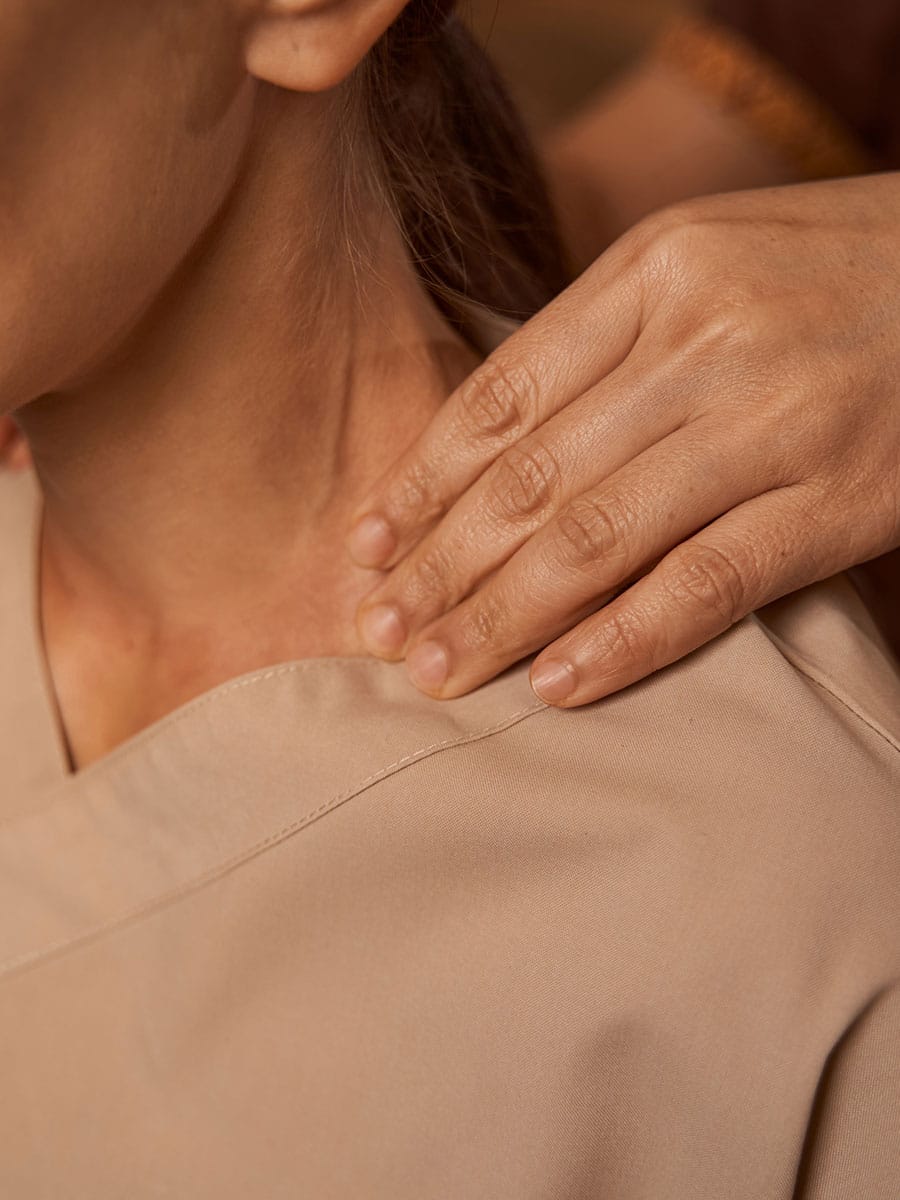

Why it happens?
The honest answer is that it is not always clear. Frozen shoulder can develop after an injury or a period where the arm has been kept still, for example following a fracture or surgery. It is also associated with certain health conditions, including diabetes and thyroid problems. But in many cases it appears with no obvious trigger at all. It tends to be more common between the ages of 40 and 60, and slightly more common in women than men, though it can affect people across a wide range of circumstances.
How we approach it at Brixton Therapy Centre
Timing makes a real difference with frozen shoulder. Patients who come to us within around the first three months of noticing symptoms tend to get very good outcomes. At this stage, hands-on osteopathic work to maintain movement, reduce pain, and support the shoulder through the initial inflammatory phase can have a significant impact on both the speed and the quality of recovery.
If the shoulder has been stiff for longer, recovery is still possible but tends to require more time and patience. At that stage, we often bring acupuncture in alongside osteopathic treatment. Acupuncture can be a useful complement for more established frozen shoulder, helping to manage pain and support the body through a longer process.
In either case, the starting point is an osteopathic assessment with one of our team. They will work out where you are in the process, what is driving your symptoms, and what the right approach looks like for you specifically.
Ready to book your appointment?
We offer a range of treatments to help you feel your best. Book online,
call us or visit our centre to schedule your appointment.
You do not need a diagnosis to come in
If your shoulder has been getting progressively stiffer and more painful, whether or not anyone has put a name to it yet, that is enough reason to book an appointment. What feels like frozen shoulder can sometimes turn out to be a rotator cuff problem, a build-up of calcium deposits, or pain referred from the neck. Our osteopaths will assess the full picture and make sure the approach we take is right for what is actually going on.
Questions People Ask Us
Is there any point coming in if my shoulder has been frozen for a long time?
Yes, absolutely. Frozen shoulder does resolve on its own eventually, but recovery tends to be more comfortable, and often faster, with proper treatment than without it. If the shoulder has been stiff for a while, an assessment will establish where you are in the process and what makes sense from here. It is never too late to get support.
Should I book with an osteopath or an acupuncturist?
We would suggest starting with an osteopath. They will assess the shoulder thoroughly, work out what stage the condition is at, and advise whether bringing acupuncture in as part of the plan makes sense for you. That is a much more reliable starting point than trying to second-guess which therapy fits best before anyone has had a proper look.
My shoulder is most painful at night. Is that normal?
Yes, night pain is very common in the earlier stages of frozen shoulder and can be one of its most wearing aspects. Sleeping becomes difficult, which affects everything else. This is something we take seriously and factor into the treatment approach from the start.
Will I need to do exercises at home?
Almost certainly, yes, though the specific exercises will depend on what stage you are at and what the assessment shows. Your osteopath will give you a tailored set and explain how to do them without aggravating things. Doing them consistently alongside treatment tends to produce better results than treatment alone.
Related Conditions
Rotator cuff syndrome: the rotator cuff muscles and tendons sit close to the shoulder capsule and can be affected alongside frozen shoulder, or occasionally confused with it in the early stages.
Still Not Sure?
If you're in pain and wondering whether we can help, that's exactly why we're here. You don't need to know what the problem is. You don't need a referral. You just need to take the first step. Book online today or call 020 7733 9944 to speak to us.