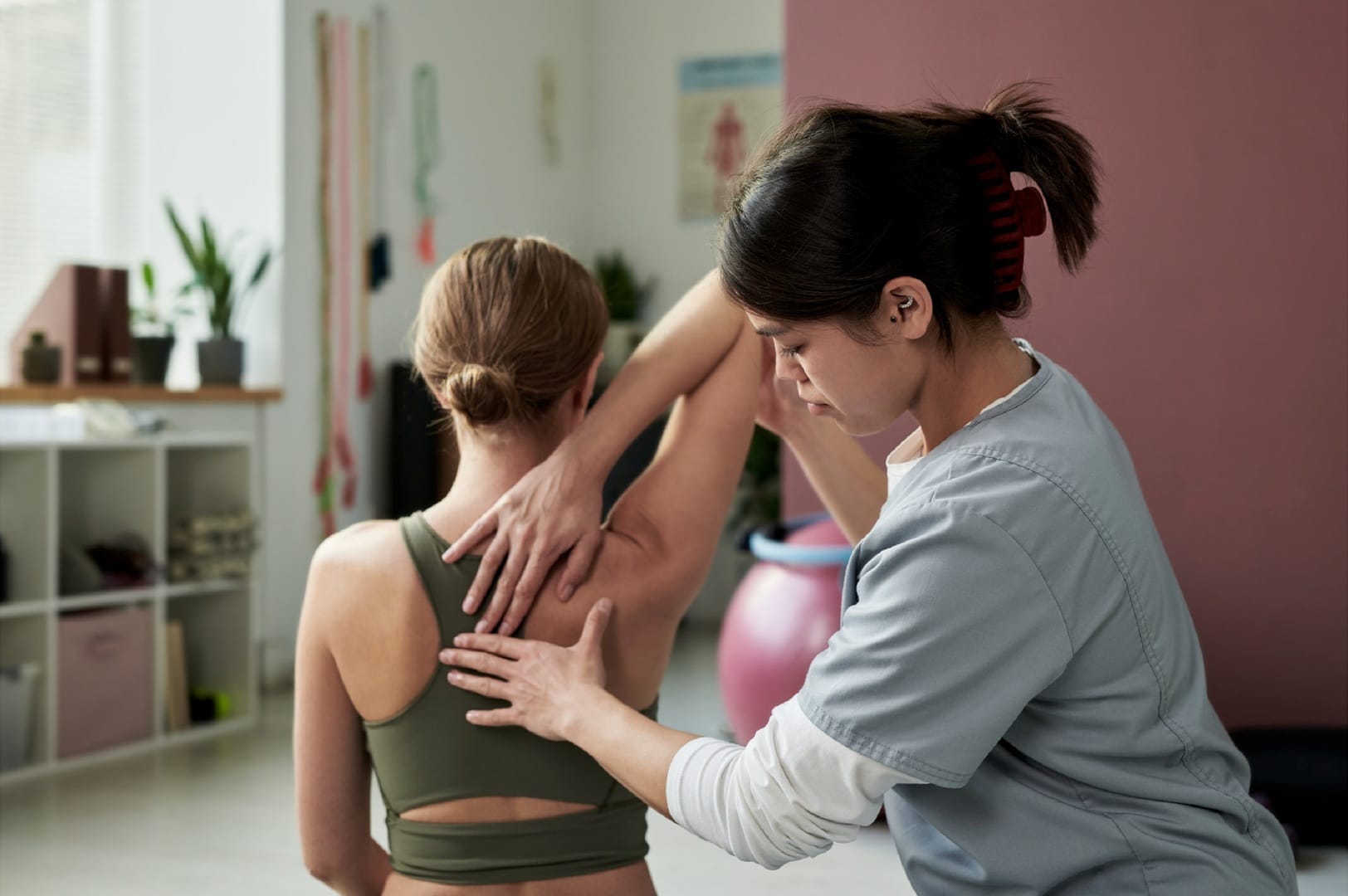
Cupping massage is a really useful way to get into muscles that won't let go. It works a little differently from a normal massage, and it's especially good for the kind of neck and back tension that builds up over weeks at a desk. These are the questions we're asked about it most in clinic.
What is cupping massage?
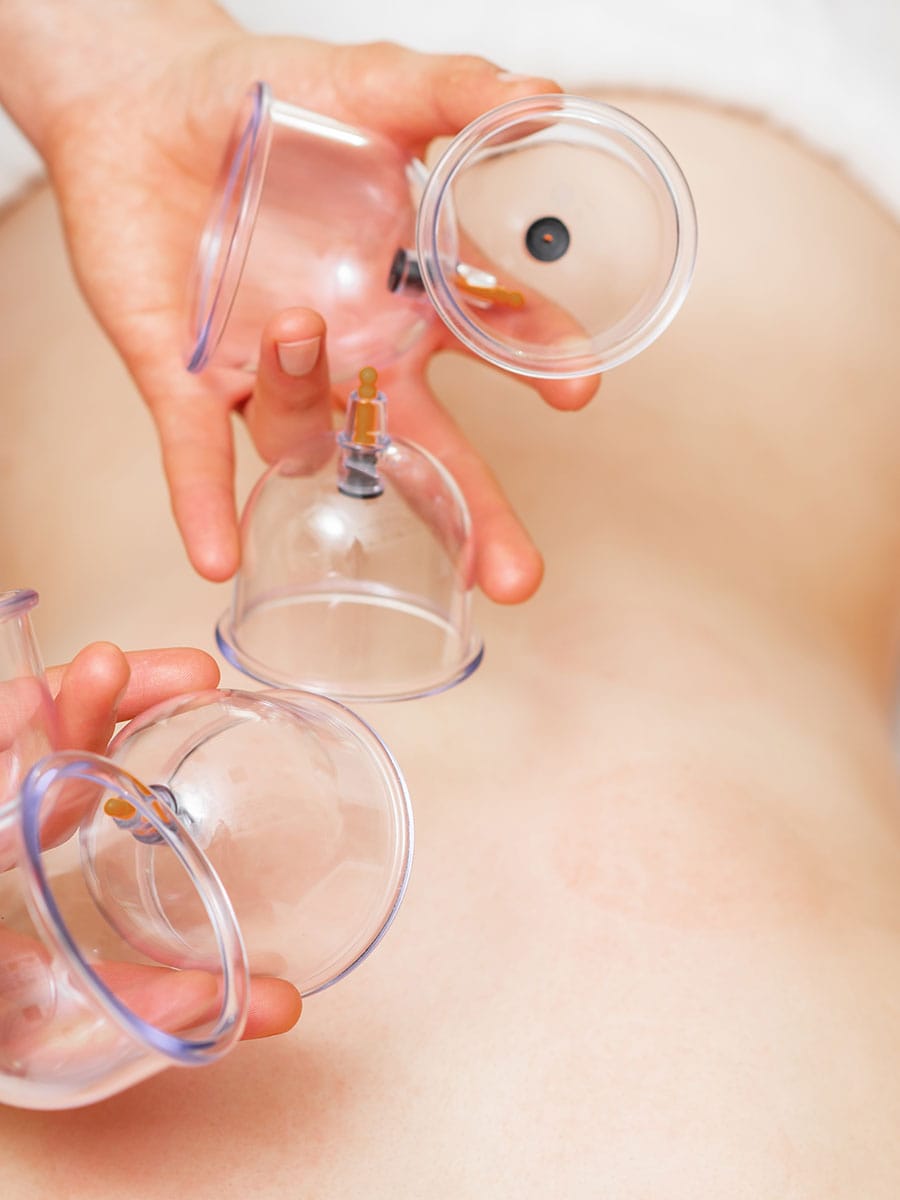
Cupping uses small cups, placed on the skin, to create suction. Instead of pressing down into a muscle the way a normal massage does, the suction lifts the skin and the tissue underneath it upwards. The easiest way to picture it is a massage in reverse.
It has a long history in traditional Chinese medicine and in other traditions around the world, but in a massage setting it's used in a practical, hands-on way to work into tight, stubborn areas.
At Brixton Therapy Centre, cupping is part of a massage rather than a separate treatment. Your therapist uses their hands as usual, and works the cups in where they'll help. Some cups are glided over oiled skin, which feels like a slow, deep stroke being pulled rather than pushed. Others are left in one place for a little while over a particularly knotted spot.
What can cupping help with?
The area it's used for most, and the one with the most research behind it, is neck and back tension.
If you spend your day at a desk, on your phone or driving, you probably know the feeling. Shoulders creeping up towards your ears, a band of tightness across the top of the back, and a lower back that complains when you stand up after a long stretch of sitting.
Those muscles can get so used to being tight that they don't respond much to a quick stretch or a hot shower. Because cupping lifts rather than presses, it works those muscles from a different direction, and many people find they feel looser for longer afterwards than after a standard massage.
The research is encouraging and still growing. A 2023 review of cupping for pain found that neck pain and low back pain had the largest number of studies, with some moderate-quality evidence that cupping may reduce pain in both. None of it is rated high quality yet, so we see cupping as a helpful tool rather than a cure.
Plenty of people also book it because they want something a bit different from their usual massage, or they tried it on holiday and loved it.
If your pain came on suddenly, or comes with pins and needles or numbness down an arm or leg, it's worth seeing one of our osteopaths for an assessment first.
What does cupping feel like?
For most people it doesn't hurt, though it does feel unusual the first time. The suction gives a strong pulling, tightening sensation, a bit like the skin being gently gathered up. Over a really tight area it can feel intense, in the same "good ache" way that deep tissue work can.
The amount of suction can be adjusted, so tell your therapist if it's too much. They would much rather turn it down than have you lying there gritting your teeth.
What about the circular marks?
If you've seen photos of swimmers covered in purple circles, you'll know the marks we mean. They come from the suction drawing blood towards the surface of the skin. Some people barely mark at all and others go quite purple, and the marks are often darker over tighter areas.
They look a lot like bruises but usually aren't tender to touch. Most fade within a few days to a couple of weeks, so if you have a wedding or a beach holiday coming up, just mention it when you book.
Gliding cups tend to leave lighter, more general redness than cups left still in one spot, and the marks often get lighter over a course of treatment.
Is cupping right for me?
Cupping suits most people. Your therapist will go through your health history before starting, and if cupping isn't right for you on the day, they'll adapt the massage instead. It helps to let us know beforehand if you:
- take blood thinning medication or have a bleeding disorder
- are pregnant
- have broken skin, a rash, sunburn or an infection over the area to be treated
- have a heart condition, diabetes or any other ongoing medical condition
What to expect afterwards
Most people feel loose and quite relaxed, and some feel a little tired. Drink some water, take it easy on the treated area for the rest of the day, and expect the marks to look their darkest for the first day or two before they start to fade.
Fancy trying it?
If your neck and shoulders have been carrying a lot lately, cupping is a lovely way to help them let go. You can book online whenever suits you, or give reception a call on 020 7733 9944 if you'd like to ask anything first.