
Heavy or Painful Periods
Most women have learned to just get on with it.
Take something for the pain, put a hot water bottle on it, cancel the plans that need cancelling. And when periods have always been like this, it is easy to assume that is simply how they are. But painful or heavy periods are not something you have to put up with, and they are not always just bad luck. There is usually something driving them, and there is often a great deal that can be done.

What's actually going on
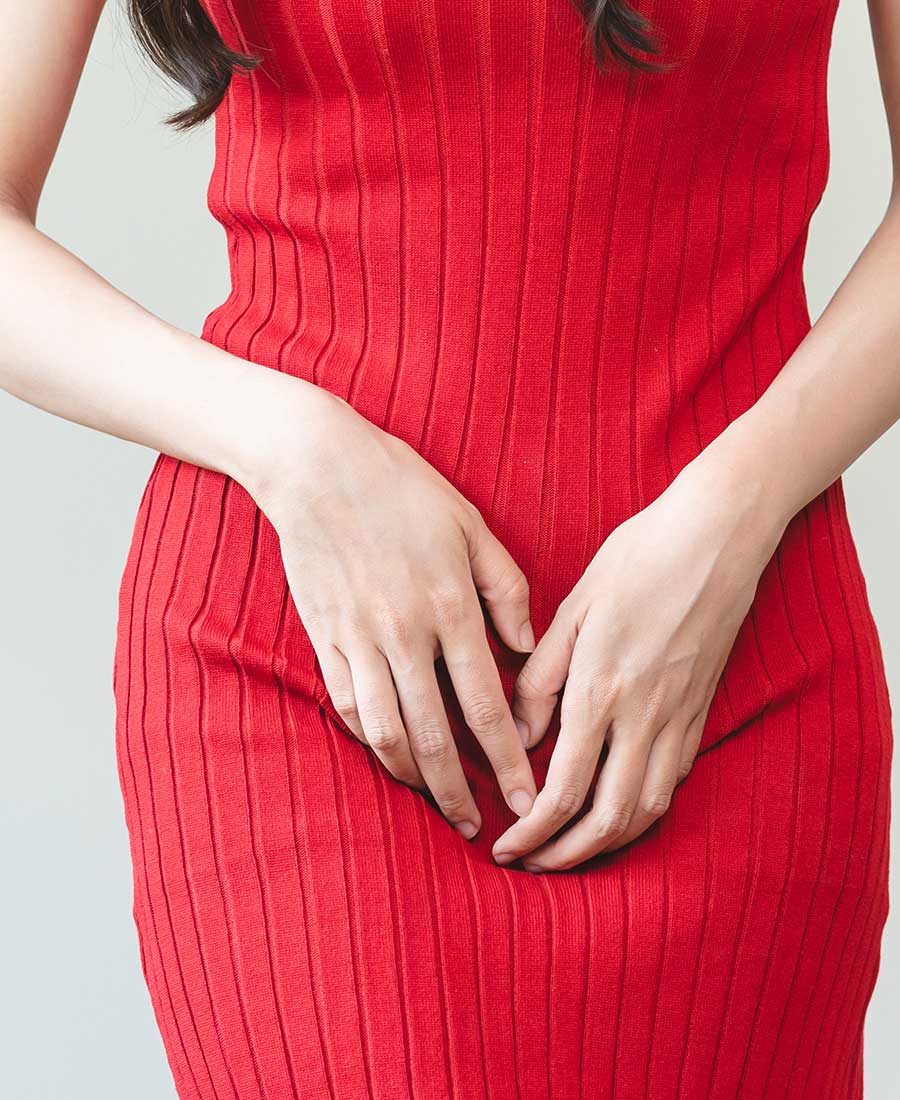
Period pain (the medical term is dysmenorrhea) happens when the muscles of the uterus contract to shed its lining. For some women these contractions are intense enough to cause significant pain, sometimes spreading into the lower back, hips, or thighs. For others, the main problem is flow: periods heavy enough to disrupt normal life, requiring extra protection, causing exhaustion, or making it hard to be far from a bathroom for any length of time. Many women experience both.
These presentations are worth distinguishing, because they can have different drivers. For some women there is no detectable underlying cause, and the experience is still genuinely debilitating. For others, painful or heavy periods are connected to something like endometriosis, fibroids, adenomyosis, or polycystic ovary syndrome (PCOS), where hormonal and physical factors go well beyond the period itself. In either case, it is not something to simply ride out indefinitely.
Why it happens
Period pain without a specific underlying cause is known as primary dysmenorrhea. It tends to start around the time periods begin and is linked to the way the body produces prostaglandins, hormone-like compounds that trigger uterine contractions. When prostaglandin levels are high, contractions can be strong enough to cause pain that is hard to ignore.
When pain is connected to an identifiable condition, it is called secondary dysmenorrhea. Endometriosis, where tissue similar to the uterine lining grows elsewhere in the body, is one of the most common causes. Adenomyosis, where that tissue grows into the muscle of the uterus, can cause both pain and heavier bleeding. Fibroids, which are non-cancerous growths in or around the uterus, can also contribute to heavy flow and discomfort. PCOS affects hormone levels in ways that can alter the regularity and experience of the cycle significantly. This is why no two people's period problems look quite the same, and why an approach that looks at the whole picture tends to work better than one focused on a single symptom.
How we approach it at BTC
Acupuncture is our first recommendation for heavy or painful periods, and it is where we would suggest starting. Traditional Chinese Medicine takes a whole-body view of hormonal health, looking at how the cycle is functioning, where imbalances may be coming from, and what might be contributing to pain or heavy flow. Rather than addressing the period in isolation, your acupuncturist builds a full picture of your health and tailors treatment accordingly.
Many patients notice a meaningful reduction in both pain and heaviness over a course of treatment. Progress tends to be gradual rather than immediate, since the aim is to support the body's own regulation rather than simply suppress symptoms. Your acupuncturist will give you a clear sense of what to expect at your first appointment, once they have had a chance to properly assess your case.
Ready to book your appointment?
We offer a range of treatments to help you feel your best. Book online,
call us or visit our centre to schedule your appointment.
Do you need a diagnosis before coming in?
Many of the women who book with us are not sure whether their periods are bad enough to warrant treatment, or whether an underlying condition like endometriosis or PCOS has even been confirmed. Neither of these things needs to be resolved before you book. If your periods are getting in the way of your life, that is enough. Our practitioners will build a full picture from scratch, and if they think there is anything worth investigating further with your GP, they will tell you.
Questions people ask us
Will acupuncture help even if there is no underlying diagnosis?
Yes. Acupuncture works from a whole-system perspective, which means the approach does not depend on a confirmed medical cause. Your acupuncturist will take a thorough case history and work from your individual pattern. Many patients who come in without a clear explanation for their symptoms see significant improvement over a course of treatment.
Can acupuncture help if I have endometriosis or PCOS?
Yes. Both conditions can affect the quality and experience of the cycle in ways that acupuncture is well placed to support. For endometriosis, it can help with pain management and may support hormonal balance alongside any other care you are receiving. For PCOS, it may help with cycle irregularity and associated symptoms. Your acupuncturist will want to understand the full picture of your case before advising on the most appropriate approach.
Does it matter where I am in my cycle when I come in?
Some practitioners do time sessions to specific phases of the cycle, particularly for conditions with a strong hormonal component. Your acupuncturist will advise on the most effective approach once they have a clear sense of your pattern. In most cases, you do not need to wait for a particular point in your cycle before your first appointment.
I am already on hormonal contraception. Can acupuncture still help?
Yes. Acupuncture can still be beneficial if you are on the pill, the coil, or another form of hormonal contraception. Your acupuncturist will take that into account when putting together your treatment plan.
Related Conditions
Perimenopause and menopause: hormonal changes in the years around menopause often alter the cycle, and many women first notice their periods becoming heavier, more painful, or more irregular before other symptoms appear.
Fertility: for women whose cycle irregularity or underlying condition is affecting their ability to conceive, acupuncture can support both. The two concerns are often connected.
Pelvic floor pain: for women whose periods are accompanied by pelvic pain, pelvic floor tightness, or pain with intercourse, pelvic floor rehabilitation can work alongside acupuncture to address the muscular side of these symptoms.
Still Not Sure?
If you're in pain and wondering whether we can help, that's exactly why we're here. You don't need to know what the problem is. You don't need a referral. You just need to take the first step. Book online today or call 020 7733 9944 to speak to us.