
Sports Osteopathy Massage
Not sure whether you need a sports massage or an osteopath? It's a question a lot of people ask, and Sports Osteopathy Massage is the answer to both at once.
It's a hands-on treatment that goes deeper than a standard massage, delivered by a fully qualified, GOsC-registered osteopath who can also assess what's actually causing the problem and build a proper plan to help you recover. Think of it as the clinical thinking of osteopathy combined with the depth and focus of a sports massage. If you're dealing with a sporting injury, a nagging soft tissue problem, or something that hasn't quite resolved despite treatment elsewhere, this is worth considering.
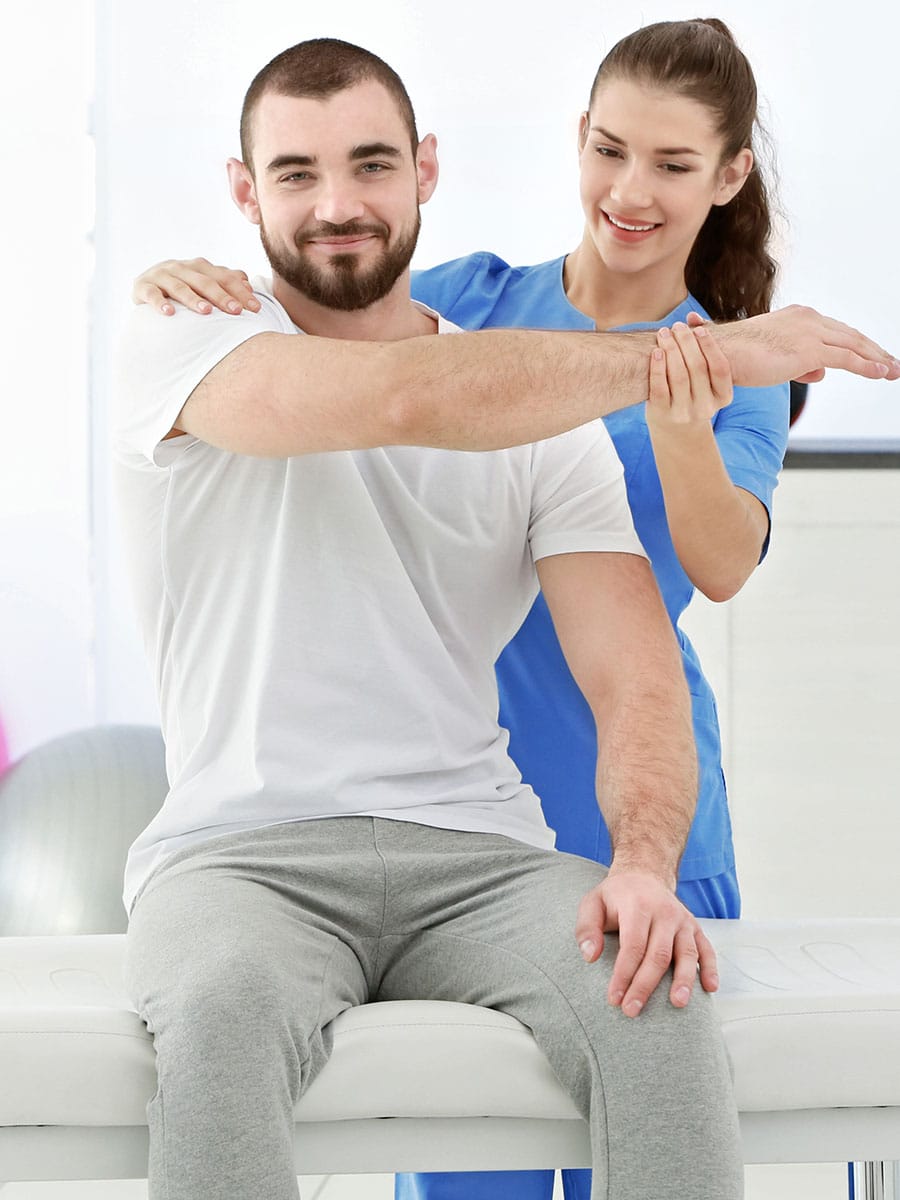


What can Sports Osteopathy Massage help with?
Sports Osteopathy Massage is particularly well suited to injuries and pain with a significant soft tissue component, but the osteopathic assessment means it can also get to the root of problems that keep coming back.
- Muscle strains and tears: deep, focused soft tissue work may support recovery, alongside advice on what to do between sessions
- Ligament sprains: the osteopathic approach allows for a fuller assessment of the injury and how it's affecting surrounding structures
- Tendon problems, including tendinopathy: careful work around the affected area may help ease pain and support the healing process
- Overuse injuries: common in runners, cyclists, and gym regulars; how you load the tissues can be just as important as treating them directly
- Back and neck pain: particularly where muscle tightness is a significant part of the picture
- Hip and shoulder pain: areas where mobility, strength, and soft tissue tension often overlap and interact
- Post-operative recovery: gentle rehabilitation work alongside osteopathic assessment to support a return to activity
- Recurring injuries: where identifying and addressing underlying movement patterns may be key to long-term improvement
Our Sports Osteopathy Massage therapists
All of our Sports Osteopathy Massage practitioners are fully registered with the General Osteopathic Council (GOsC), the UK statutory regulator for osteopaths. Their degree-level training in osteopathy covers anatomy, physiology, diagnosis, and hands-on treatment in depth, giving them both the clinical understanding to identify what's actually going on and the manual skills to treat it effectively.
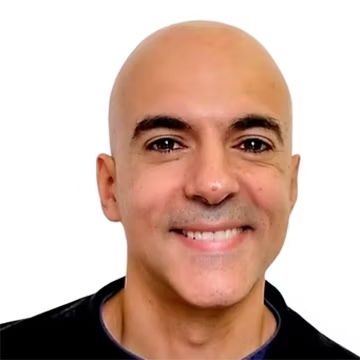
Reno Pelekanou
Registered Osteopath M.Ost
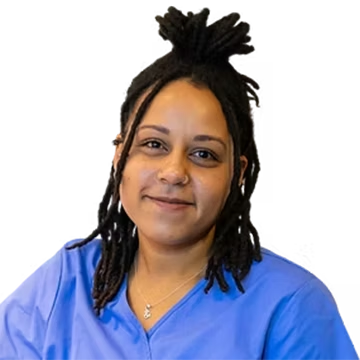
Naomi Nekesa
Registered Osteopath M.Ost
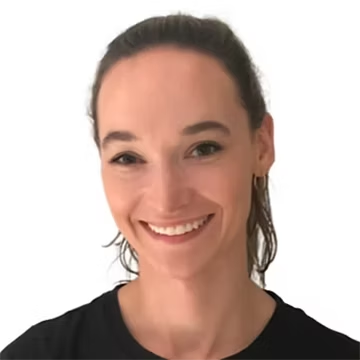
Mollie Tappenden
Registered Osteopath M.Ost
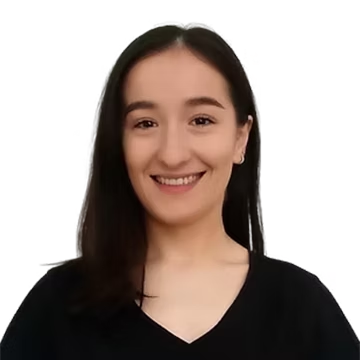
Lilou Convert
Registered Osteopath M.Ost
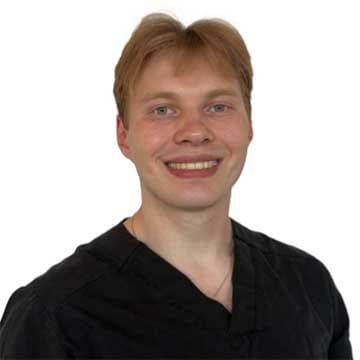
Reinhard Erk
Registered Osteopath M.Ost
Ready to book your appointment?
We offer a range of treatments to help you feel your best. Book online,
call us or visit our centre to schedule your appointment.
What to Expect at Your First Appointment
- Wear something comfortable and loose-fitting; you'll remain fully clothed throughout the treatment
- Your appointment will start with a conversation about your health history and what's brought you in. If you're not sure how to describe what's going on, don't worry. We're used to working it out together.
- You'll lie on a treatment table while your osteopath uses a very light, gentle touch, typically beginning at the head, sacrum, or feet. There's nothing you need to do; just let yourself settle.
- Most people find it deeply relaxing. It's not unusual to drift off during the session, which is completely normal and often a sign the body is responding well.
- Afterwards you might feel a little spacey or tired as your body integrates what's happened. Try not to rush straight back into a hectic day if you can help it.
Pricing
Osteopathy Sports Massage
£125
Your Questions Answered
How is Sports Osteopathy Massage different from a regular osteopathy appointment?
A standard osteopathy appointment focuses on assessing and treating the musculoskeletal system as a whole, often using a mix of joint mobilisation, articulation, and some soft tissue work. Sports Osteopathy Massage puts far more emphasis on the soft tissue side: longer, deeper, more targeted hands-on work into the muscles and surrounding structures. You still get the osteopathic assessment and clinical thinking, but the treatment itself is more like a focused therapeutic massage, delivered by someone with full diagnostic training and a detailed understanding of biomechanics.
How is it different from a sports massage?
The hands-on work can feel similar, but the key difference is in what the person delivering it can do. Our Sports Osteopathy Massage practitioners are GOsC-registered osteopaths, which means they can assess how you move, identify the underlying cause of the problem, and advise on rehabilitation and injury prevention alongside the treatment itself. A sports massage therapist focuses primarily on the soft tissues directly. Here, you get that hands-on depth with an extra layer of clinical assessment behind it.
Will it hurt?
Deep soft tissue work can feel intense, particularly if the area being treated is tight, injured, or hasn't had much attention before. That said, it shouldn't be unbearable. Your practitioner will always work within your comfort level and check in during the session. A degree of soreness in the day or two after treatment is common and usually settles quickly. If anything feels wrong, let your practitioner know.
How many sessions will I need?
It depends on the nature of the problem and how long it's been going on. Acute injuries that are relatively recent often respond well in a small number of sessions. Longer-standing or recurring problems usually benefit from a short course of treatment, and may also involve some rehabilitation work between appointments. Your practitioner will give you an honest assessment after the first session and won't recommend more appointments than they feel are genuinely useful.

Should I wait until it gets worse?
We hear this all the time: "It's not that bad yet, I'll see how it goes." The truth? Muscle and joint pain doesn't usually resolve the way a cut or bruise does. The longer compensation patterns continue, the harder they can be to correct. Early treatment often means: fewer sessions overall, faster recovery, lower risk of chronic issues, better long-term mobility. Prevention is always easier than cure.
Why Choose Brixton Therapy Centre?
- 7-day appointments
- Early morning and evening availability
- Emergency appointments when possible
- Phone support 7am-9pm
- Personalised exercise plans
- Confidential, detailed reports if needed
- Online booking, fast and secure
- Caring for the Brixton community since 1999
- Concessions for those on low income (call to ask)
- Concessions for NHS staff (call to ask)
Still Not Sure?
If you're in pain and wondering whether we can help, that's exactly why we're here. You don't need to know what the problem is. You don't need a referral. You just need to take the first step. Book online today or call 020 7733 9944 to speak to us.
Cranial
Osteopathy
A very gentle form of osteopathy that works with the body's own rhythms; suited to all ages
Paediatric
Osteopathy
Specialist osteopathic care for babies, children, and teenagers
Pregnancy
Osteopathy
Hands-on osteopathic support through pregnancy, helping to ease pelvic pain, lower back ache, and the physical strain
Osteopathy
Sports
Massage
Soft tissue work combined with osteopathic assessment, focused on performance, recovery, and keeping active bodies moving well
Shockwave
Therapy
A non-invasive option for stubborn tendon and soft tissue problems that haven't responded to other treatment
Dry
Needling
A targeted technique used by our osteopaths to release muscle trigger points and ease localised pain and tension