
Sports Injuries
Gone over on your ankle? Pulled a hamstring? Torn a calf muscle mid-sprint? Getting the right treatment early makes a real difference to how quickly, and how fully, you get back to sport.
Sports injuries are one of the most common reasons active people come to see us, and we treat them at every stage: from the first couple of days through to a structured return to training and competition.
What's actually happening: Sprains, strains, and muscle tears are all soft tissue injuries, but they affect different structures. A sprain involves the ligaments holding a joint together, most often at the ankle, knee, or wrist. A strain involves a muscle or the tendon attaching it to bone, commonly the hamstring, calf, or groin. A muscle tear is a more significant strain, where fibres within the muscle have actually been disrupted rather than simply overstretched.
All three are graded by how much damage there is. A mild injury means some fibre damage, but the structure is still largely intact and working. A moderate injury involves more significant damage and some loss of function. A severe injury means the ligament or muscle is substantially or completely torn, and these take longer to heal and can occasionally need further investigation. Working out where your injury sits on that scale is one of the first things we do, because it shapes everything that follows.
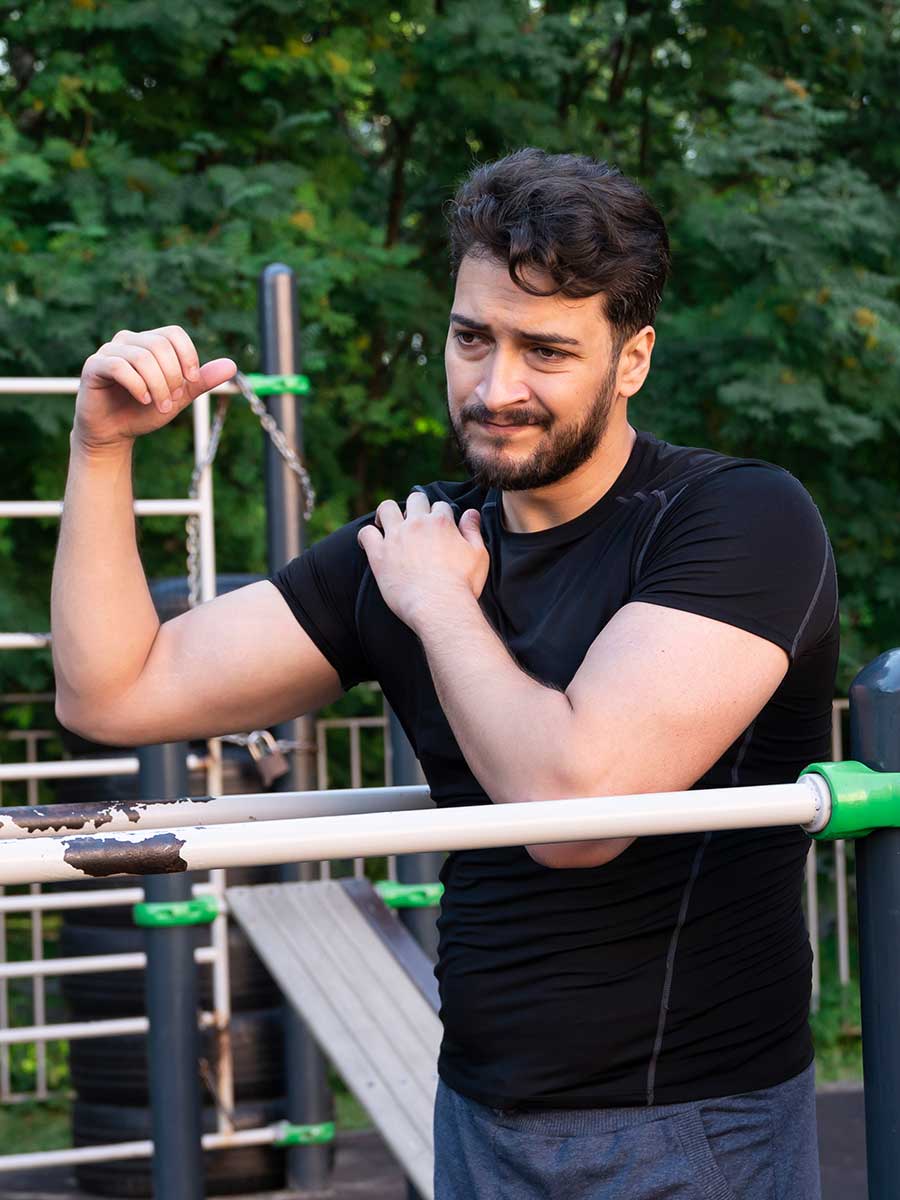

Why it happens?
Most sprains, strains, and tears come down to a handful of causes: a sudden change of direction, an awkward landing, overstretching beyond what the tissue can cope with, or asking a muscle to work harder or faster than it's conditioned for. Fatigue plays a big part too. Tired muscles absorb load less effectively, which is why injuries often cluster towards the end of a match or a long session.
A previous injury is one of the strongest predictors of a new one. If an old sprain or strain wasn't fully rehabilitated, the area is often left weaker or less stable than before, and can end up being a repeat problem. Poor warm-up, under-conditioning, and returning to sport too soon after a previous injury all raise the risk too.
How we approach it at Brixton Therapy Centre
The first couple of days matter. The priority early on is managing pain and swelling and protecting the injured area, while avoiding complete rest, which can slow healing and lead to stiffness. Our team will guide you on what movement is helpful and what's too much at this stage.
Once things have settled, an osteopathic or physiotherapy assessment is the right next step. Whichever you choose, the approach is much the same: working out exactly what's been affected and building a rehabilitation plan around it, restoring movement, rebuilding strength, and retraining control.
The final stage, and often the most overlooked, is returning to sport itself. Getting back to pain-free daily life isn't the same as being ready to sprint, twist, tackle, or land safely again. We work with you through progressive loading and sport-specific movement to bring down the risk of re-injury, so that when you do return, you return properly.
Ready to book your appointment?
We offer a range of treatments to help you feel your best. Book online,
call us or visit our centre to schedule your appointment.
You do not need a confirmed diagnosis to come in
You don't need to know whether you've got a sprain, a strain, or a tear, or how bad it is, before booking. Plenty of people aren't sure exactly what they've done, only that something gave way and it now hurts. That's reason enough to come in. Our team will assess the injury from scratch, work out what's happened, and build a plan around it.
Questions People Ask Us
How soon after an injury should I come in?
As soon as you can. Early assessment helps guide how you should be managing things in those first few days, and means your rehabilitation starts from an accurate picture rather than guesswork. That said, it's never too late to come in, even if the injury happened weeks or months ago.
Do I need a scan first?
Not necessarily. Many sprains, strains, and muscle tears can be assessed clinically without imaging. If your practitioner feels a scan would change how your injury is managed, most commonly for a suspected severe or complete tear, they'll explain why and point you in the right direction.
How do I know when I'm ready to return to sport?
This is exactly what the later stages of treatment are built around. Being pain-free isn't the same as being ready. We assess strength, control, and movement quality specific to your sport before recommending a return, building a gradual plan rather than an all-or-nothing decision.
Related Conditions
Achilles tendinopathy: an overuse injury of the Achilles tendon that can develop alongside, or be mistaken for, a calf strain
Still Not Sure?
If you're in pain and wondering whether we can help, that's exactly why we're here. You don't need to know what the problem is. You don't need a referral. You just need to take the first step. Book online today or call 020 7733 9944 to speak to us.